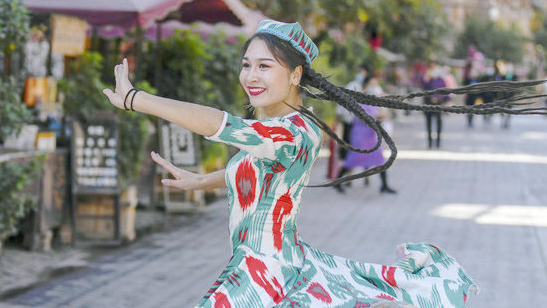
Traditional Uygur Costume
Introduction
Traditional Uygur costume refers to the culturally rich and vibrant attire worn by the Uygur people, an ethnic group primarily residing in the Xinjiang Uygur autonomous region of China. These costumes are not only an expression of cultural identity but also a work of art that reflects the history, social dynamics, and artistic talent of the Uygur people. The traditional attire is characterized by its colorful patterns, intricate embroidery, and the use of materials that have been a part of Uygur heritage for centuries.
Historical Background
The Uygur people have a long history that dates back over a thousand years, during which their costumes have evolved significantly. The traditional attire has been influenced by various cultures due to the region's role as a historic crossroad on the Silk Road, which brought in diverse cultural and artistic exchanges. The garments represent a blend of Central Asian, Persian, and local aesthetics, showcasing the multicultural tapestry that has shaped Uygur history.
Components of Traditional Uygur Costume
Traditional Uygur costumes vary significantly depending on the occasion, gender, age, and even the region within Xinjiang. Common components of the attire include:
Doppa: A traditional four-cornered cap worn by both men and women, often adorned with intricate embroidery.
Atlas: A type of silk fabric known for its bright colors and distinctive patterns, frequently used in women's dresses.
Chapan: A long, loose coat often worn by men over their other clothing. It can be quilted for warmth and is typically made of silk or cotton.
Accessories: Accessories such as scarves, belts, and jewelry play a crucial role in the traditional costume, often adding a touch of personal expression.
Cultural Significance
The traditional Uygur costume is deeply embedded in the cultural identity of the Uygur people. Each element of the attire carries symbolic meanings and represents various facets of Uygur life, from social status to marital status. The colors and patterns often have cultural significance, with specific designs being passed down through generations. These costumes are worn during cultural festivals, weddings, and important community events, serving as a symbol of continuity and cultural pride.
Influence on Local Economy
The resurgence of interest in traditional Uygur costumes has also had a positive impact on the local economy in regions like Kashgar. Boutiques selling these costumes have become popular tourist attractions, drawing visitors who are keen to experience and photograph themselves in traditional attire. This cultural enterprise not only helps preserve Uygur heritage but also provides economic opportunities for local artisans, tailors, and entrepreneurs.
Preservation of Craftsmanship
The craftsmanship involved in creating traditional Uygur costumes is an art form that has been passed down through generations. Many aspects of this craft, such as weaving, embroidery, and tailoring, are specialized skills that require years of practice to master. The preservation of these skills is crucial for the continued production of authentic traditional costumes. Efforts to document and teach these skills to younger generations are essential to ensure that the cultural heritage of the Uygur people is not lost.








